Image courtesy of lifeassure.com
There is a particular tension that comes with the sandwich years. The school run still owns half the morning. The work calendar still owns the middle of the day. The text from a sister, asking whether anyone has heard from Mam since Tuesday, has started to own the evenings. Irish families have always organised around looking after the older generation, but the practical mechanics of doing it from across the country, or across the Irish Sea, or across the Atlantic, have shifted dramatically over the past few years.
The quiet thing that has changed most is the technology that sits between the older parent and the rest of the family. The pendant alarm of a decade ago has been replaced by a connected, GPS-equipped, two-way-audio device that does considerably more for considerably less daily friction. A modern Life Assure medical alert system is the kind of small, calm piece of household infrastructure that lets the rest of the family worry less without having to phone every evening. This piece is for the Irish family weighing whether the time has come.
When Does an Irish Family Usually Decide to Get an Alert System?
The decision rarely arrives all at once. It usually arrives after a near-miss or a slow accumulation of small worries.
After a fall that didn't quite become a hospital trip. The recovery is slow, the confidence is shaken, and the next event is now the question that nobody wants to ask aloud.
After a hospital discharge. The paperwork mentions home safety and family support, and the family suddenly realises that the house is quieter than it used to be.
After a diagnosis. Heart-related, neurological, or anything that introduces sudden episodes. Even a milder diagnosis like vertigo or a hearing impairment that affects balance changes the calculation.
After a partner passes. The remaining parent has lived with constant company for forty years, and now the house is silent for hours at a time. The medical alert is partly safety, partly companionship in the form of a service that answers when called.
After a move. Either the parent moving to a smaller place, or the adult children moving further away. Each kind of move loosens the safety net that proximity provided.
The patterns across Irish families are remarkably consistent, and the framework of practical advice maintained by Age Action Ireland for adult children supporting older relatives mirrors what most families work through on their own. The conversation usually starts a season or two before the family is fully ready to have it.
What a Modern Mobile Medical Alert Actually Does?
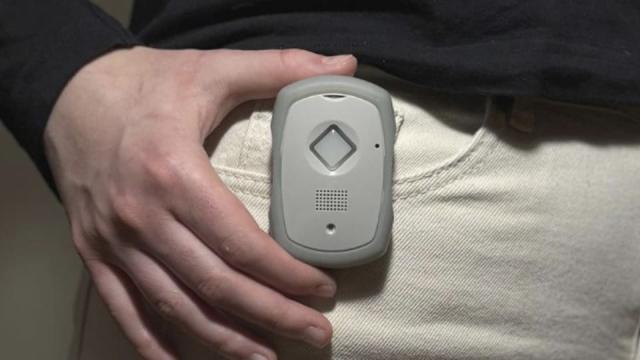
The current generation of mobile-plus devices does considerably more than the press-button alarm Irish grandparents will remember from the 1990s. A current device combines several functions into a single piece of equipment.
Automatic fall detection. A multi-axis sensor recognises a hard fall and triggers an alert without the wearer having to press anything. This matters most for the events the wearer cannot signal themselves.
Two-way audio. A clear speaker and microphone built into the pendant lets the monitoring centre talk to the wearer the moment something triggers. Most events are not falls. Many are dizziness, breathlessness, or chest discomfort, and the conversation alone is often the deciding factor in what kind of help gets dispatched.
GPS tracking. The pendant works outside the house, in the back garden, on the walk to the local shop, on the bus, on the train. For a parent with mild memory issues, the location signal is genuinely useful.
Cellular connectivity. The pendant has its own SIM and does not depend on the parent's home Wi-Fi or a phone they may not always remember to charge. Reliability under power cuts and patchy broadband, both common in rural Ireland, is significantly higher.
Daily charging cradle. The device sits in a cradle on the kitchen counter or beside the bed each evening, the same way a hearing aid does. The habit becomes part of the morning and bedtime routines.
A short list of medication reminders. Many devices double as discreet reminders for the parent's medication schedule, which the family can set from the app side without any face-to-face friction.
How to Talk to Mam or Dad About It Without Insulting Them?
This is genuinely the hardest part. Irish parents of a certain generation are independent in a particular way that does not always welcome the implication that they need help.
Frame the device as something for the family's peace of mind, not for the parent's safety. The truth is both, but the framing changes how the conversation lands. Saying "I'd worry less if you had this" sits better than "I think you need this".
Bring it up after a positive event, not a worrying one. A medical alert conversation in the days after a fall reads as a guilt trip. The same conversation a fortnight later, after a normal Sunday dinner, reads as care.
Make the parent the decision-maker. Show them options. Let them pick the colour, the device style, the cradle location. The agency matters.
Don't oversell the technology. Most Irish parents of the relevant age are not going to use the optional medication reminders, the activity tracking, or the elaborate app side. The device's job is to do one thing reliably. Promising more sets up a small disappointment that erodes trust.
Make the family roles clear. One adult child manages the account, charging cradle visits, and the monthly subscription. Other siblings receive notifications and visit normally. The shared spreadsheet of who is doing what should arrive before the device does.
What Irish Multigenerational Households Get From the Device?
For households where the parent has moved in with adult children, or where the adult children have moved in with the parent, the medical alert plays a different role. The constant proximity already covers some of what the device adds, but several specific scenarios still warrant it.
The parent is alone in the house for stretches when the rest of the family is at school, at work, or running errands.
The parent goes to the shops, the post office, or the pub on their own and the family wants the GPS coverage during those windows.
The parent has memory issues that occasionally produce wandering. The GPS in this case is not optional.
The parent's medical history makes a sudden event likely enough that the family wants instant connection to a monitoring service, not just to whoever happens to be in the next room.
For families building this kind of multi-generational rhythm, grandparents are part of the rotation rather than calling once a week, sitting on the same sofa for TV shows the whole family can watch together. The medical alert is the quiet piece of hardware that lets that pattern keep working as the older generation continues to age.
Health Considerations That Make a Big Difference
A small list of health-side considerations that change which device makes sense.
Cardiac history. Devices with strong two-way audio and proven dispatch protocols matter most here. A monitoring service that has handled tens of thousands of cardiac events knows how to triage. The Canadian client's underlying cardiac context is shaped by data published by the the World Health Organization's falls fact sheet on how time-to-treatment determines outcomes.
Reduced grip strength or arthritis. Devices with a large central button and a reliable auto-fall detection are friendlier than devices that require holding the button down for several seconds.
Hearing impairment. Two-way audio at clear volume matters more than the wearer's family realises until the device arrives. Some devices include vibration alerts as a backup channel.
Cognitive decline. Devices that simplify to one button only, with consistent device shape and consistent charging-cradle design, work better than feature-rich devices. Living rurally. The cellular signal in rural Ireland is uneven, and the choice of device should be tested on the parent's actual property before the contract starts. Most providers offer a trial window.
One of the world's oldest women to conceive naturally has just given birth, which is a useful counterweight to the assumption that once a parent passes a certain age, decline is the only direction. Many Irish parents in their seventies and eighties live full, active lives for years, and the medical alert is what keeps them in those lives rather than gently herding them toward less.
Common Mistakes Irish Families Make
A short, observed list of the recurring missteps.
Buying the cheapest base device with no GPS. Most Irish parents are not housebound, and the cheaper home-only base unit produces a real coverage gap.
Forgetting that the parent travels. A fortnight in Spain or a month in Boston with the family deserves a device that roams, and not all do.
Assuming the wearer will charge it consistently without help. The first six months usually involve one of the adult children visiting once a week to confirm the cradle is being used. The habit takes a season to lock in.
Skipping the family-side notifications setup. The device is supposed to make the family worry less. Without notifications routed properly, the family ends up phoning the monitoring centre or the wearer to confirm everything is fine, which defeats half the point.
Buying a device because of an older relative's recommendation about the brand they had a decade ago. The category has changed enormously. The brand they remember may not be the right brand now.
Quick-Reference Checklist for Irish Households
-
Daily Habits That Improve Outcomes
-
Charge the device at the same time every evening so it never goes flat by accident
-
Wear it during cooking, gardening, and shower routines, not only on outings
-
Keep the GPS profile updated when travelling between Dublin and rural counties
-
Test the SOS button monthly with a familiar family contact

Image courtesy of lifeassure.com
Conversation Starters With Mam or Dad
Frame the device as peace of mind for the household, not a sign of decline
Lead with practical examples like a slip in the kitchen or a fall on the stairs Involve a sibling or trusted GP in the first conversation rather than going solo
Offer a thirty-day return window so the decision feels low-stakes
Practical Setup Steps for the First Week
Add three trusted contacts the operator can reach out to in an event
Confirm the home address and any holiday addresses are stored in the account
Set medication reminders inside the partner app for daily prescriptions
Confirm the cellular carrier covers the wearer's regular routes around the county
Frequently Asked Questions From Irish Families
Will the device work if Mam or Dad goes on holiday in Spain or Portugal?
Most current Canadian providers' devices roam on partnered cellular networks across Europe, including Ireland and continental travel destinations. Confirm coverage and update the wearer's address in the system before any major trip.
Can the parent wear the pendant in the shower?
Most current devices are splash-resistant or fully waterproof, which matters because the bathroom is statistically the highest-risk room in the house. Confirm the IP rating before purchase.
What happens if the device gets pressed by accident?
Modern devices include a brief cancellation window. The monitoring operator opens the two-way audio, confirms with the wearer, and stands down without dispatch if the press was accidental. Real events get faster response. False positives become a calm thirty-second conversation.
Who in the family should manage the account?
Best practice is one named adult child as primary, with one or two others on the notification list. Avoid splitting the active management across siblings, which produces ambiguous responsibility and missed maintenance.
A Final Note for Irish Families
The unromantic truth about caring for an older parent at a distance is that worry expands to fill any gap left in the schedule. A modern medical alert is not a substitute for the visits, the phone calls, and the cup of tea that hold the relationship together. It is the small, quiet, dependable piece of household infrastructure that lets the worry recede from the foreground of the day, so the actual relationship can do what it has always done. The device does its job in the background, and the family gets to keep being the family.