If you've ever handed your child a tablet for twenty minutes of peace and wondered what exactly they're scrolling through… well, new research suggests we might all need to sit down for this one.
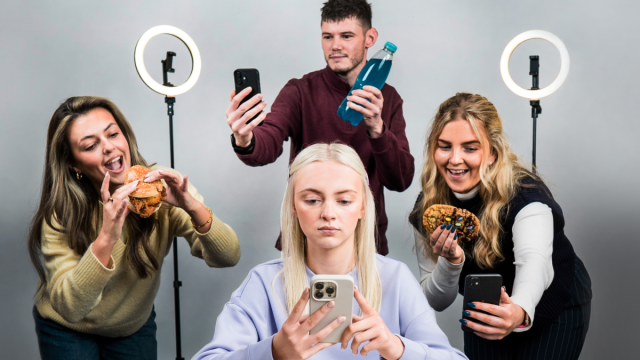
A major new report from Safefood has revealed that Irish children are being exposed to unhealthy food marketing online roughly every four minutes. That's not a typo. Every. Four. Minutes. So while you're making the lunches, answering work emails and trying to remember if you defrosted the chicken, your kids are being bombarded with ads for foods that don't exactly scream "balanced diet".
The study, launched this week at Safefood's 'Games, apps, ads: the impact of digital food marketing' event in Dublin, found that children see an average of 15 to 19 marketing posts every single hour on social media. For context? A child spending just two hours a day on their phone could be exposed to almost 11,000 unhealthy food marketing posts in a year. And for those clocking 4.5 hours daily (hello, teenagers), that figure shoots up to over 30,000.
Let that sink in while you scrape the Weetabix bowls.
Parents Are Largely in the Dark
Here's where it gets even more unsettling. The research found that most of us parents genuinely have no idea how much of this content our kids are seeing. Many believe their children are largely immune to the effects of marketing. Which is a comforting thought until you realise it's not quite accurate.
When parents in the study were shown examples of the kind of marketing their children encounter, they described it as "manipulative", "subtle", "clever" and even "insidious". Strong words. But probably fair ones.
Joanne Uí Chrualaoich, Safefood's CEO, didn't mince her words either: "The research shows for the first time on the island of Ireland the volume of unhealthy food marketing children see online. These findings are concerning as this daily influence is undermining efforts to foster healthy eating habits and poses a serious threat to children's long-term health. Parents described the findings as worrying and we echo that sentiment – this is worrying."
Almost 96% of the foods presented to children in the study didn't meet WHO guidelines for marketing to children. Ninety-six percent. That's basically everything except the odd apple that sneaks through.
Influencers Are the Real Game-Changers
Now, this is where it gets really interesting (and slightly maddening if you've ever tried to explain to a nine-year-old why they can't have everything they see on YouTube).
The study found that teenagers watched food marketing posts from influencers for five times longer than traditional paid ads. We're talking an average of 15 seconds per influencer post versus just a few seconds for regular adverts. And engagement? A whopping 44% of influencer posts got interactions from teens compared to just 7.5% of standard paid ads.
Aileen McGloin, Director of Nutrition at Safefood, explained why this matters so much: "Children don't identify this as marketing but rather see it as engaging or fun content from someone that they trust. This is a clear example that the child's interests and interactions online drives the amount of this unhealthy content that they are exposed to."
So when your child insists they need that particular energy drink or snack because their favourite gamer was eating it? That's not coincidence. That's extremely sophisticated marketing doing exactly what it's designed to do.
Kids Can't Tell the Difference
Perhaps the most concerning finding is how much children struggle to recognise commercial content for what it is. Even older teenagers often can't distinguish advertising from regular social media posts. They might label something as an "ad" but still don't fully understand it's designed to persuade them to buy something.
This is particularly true for influencer content and what's called "native marketing" – where ads are woven so seamlessly into everyday content that the line between entertainment and selling disappears entirely.
The researchers found that children frequently responded to digital food marketing with feelings of hunger, thirst, pleasure and enthusiasm. Which makes perfect sense when you think about it. These ads are designed by teams of very clever people whose entire job is to make food look irresistible.
McGloin added: "Our findings show that children are still widely exposed to online marketing and advertising despite the voluntary code. Digital advertising is now highly sophisticated and many of the methods used are not currently restricted."
What Can Parents Actually Do?
Look, none of us are about to confiscate every device in the house and go full 1985. That ship has sailed. But this research does highlight just how much is happening in those quiet moments when the kids are "just watching videos".
Having conversations about advertising might feel a bit naff, but it's worth trying. Pointing out when content is sponsored or when an influencer is being paid to promote something can help build that critical thinking muscle. Even if your child rolls their eyes so hard you worry they'll get stuck.
The full report is available on Safefood's website for anyone who wants to dive deeper into the findings. It's worth a read. Even if it does make you want to hide every tablet in the house for a week.
Because while we can't control everything our kids see online, understanding what they're up against feels like a pretty good place to start.