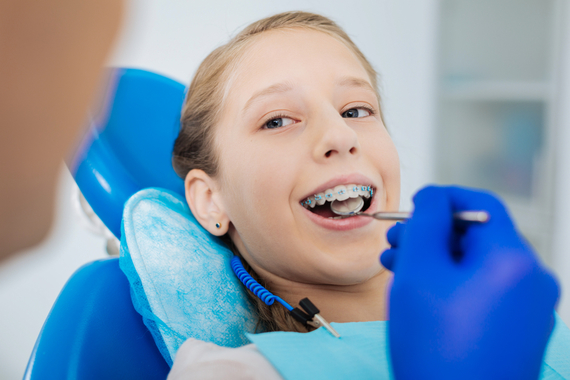
Orthodontic braces are usually recommended while the mouth and head are still growing. They are used to properly space teeth and align the upper and lower jaws. The best time for brace placement is between 10 and 14 years old, but any patient with an orthodontic issue can benefit from braces at any age to attain a winning smile. But, are braces recommended for children, too? Yes, it is also the case with braces for kids.
Below are the important benefits of braces for children.
Resolve Overcrowding of Teeth
According to the American Association of Orthodontists or AAO, the perfect time for children to undergo orthodontic checkup is no later than seven years old. Malocclusions include overcrowding of teeth, open bite, crossbite, underbite, and overbite. Through early orthodontic evaluation, jaw alignment problems or malocclusions will be detected.
Generally, a child needs to see a dentist as early as infancy, and the dentist will refer you to an orthodontist when malocclusions are spotted. However, early treatment is crucial, so before your child turns seven, make sure that he undergoes orthodontic evaluation.
Here are the benefits of early orthodontic evaluation:
- The orthodontist can guide jaw growth.
- There's a lower risk of trauma caused by protruded front teeth.
- Early correction of unhealthy oral habits will be implemented.
- There is a higher chance to improve appearance.
- The orthodontist can guide permanent teeth into their best position.
- Early orthodontic evaluation improves the way your child's lips meet.

Promotes Healthy Dental Habits
Braces correct bite and align the tooth, and wearing them provides a lot of benefits for children aside from aesthetic purposes. It promotes healthy dental habits, including the following benefits:
- Teeth becomes easier to brush
- Improves your child's ability to chew food
- Reduces cavities and gum disease
- Prevents or minimizes chipping or grinding of teeth
Alleviates Speech Impairment
Malocclusion or misalignment of teeth can cause chronic speech problems. When your child tends to whistle when pronouncing words or creating sounds, or mumble, an orthodontic problem could be present. Braces help correct any malocclusion or misalignment. Also, braces can help eliminate or reduce speech problems.
Here are the different types of malocclusions that can impair speech:
- Bruxism: Grinding or clenching teeth while asleep at night can result in chronic jaw disorders that can affect speech.
- Open Bite: The upper and lower teeth tend to extend from the jaw (forward) and don't fit properly when closed. Children who thumb suck tend to have an open bite, which can lead to speech problems. It may also impede proper oral hygiene and lead to uneven teeth.
- Gaps Between Teeth: Braces would definitely be recommended if your child has spaces between teeth or if a tooth is missing to ensure proper teeth growth and development, which results in proper pronunciation of words.
More Treatment Options Available
The possible signs that your child has orthodontic problems include difficulty biting or chewing, mouth breathing, finger or thumb sucking, biting the roof of the mouth or cheek, the early loss of baby teeth, and teeth and jaws that are out of alignment. Through early detection and brace placement, more treatment options will be available, and the condition would also be easier to treat.
With early orthodontic checkup, one of the treatment options available include braces, wherein the orthodontist uses plates or wires to stabilize the jaw bone. Also, teeth bonding, capping, or reshaping will be done.
Here are the benefits of treating orthodontic problems early:
- Gains or preserves space for permanent teeth
- Reduces or eliminates the need to remove permanent teeth
- Improves the width of oral arches
- Reduces impacted permanent teeth
- Improves self-confidence
- Reduces the possibility of future surgery to shorten or reshape the jaw
Improves Self-image
Children, just like teenagers and adults, are also conscious about their looks. As early as childhood, the concept of self-identity is established. With the advancement of technology and the proliferation of various social media platforms, the younger generations already have an idea of what is considered beautiful or unpleasant to the eyes.
That's why it's worth investing in your child's dental health, particularly addressing orthodontic problems early to ensure that your child appears at their best, which leads to positive self-image and self-confidence. By doing so, your child becomes more sociable.
Braces are highly beneficial for children. Even before your child turns seven years old, bring your child to an orthodontist to help detect early orthodontic problems, like open bite and overcrowded teeth. Before treatment options become limited, it's important to detect dental problems early to cut down on dental care costs, as well as promote long-term oral health stability.