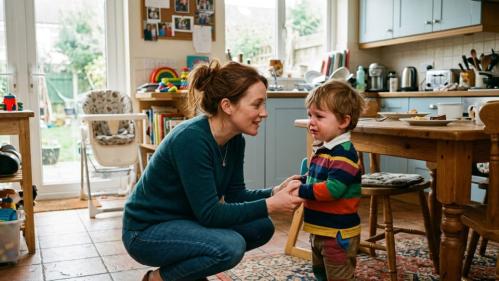

We've all been there – you're in the middle of Tesco when your little one suddenly melts down over a packet of biscuits. Or perhaps it's bedtime at home and your toddler decides they absolutely cannot wear pyjamas tonight. If you're feeling overwhelmed by your child's big emotions, you're not alone. Toddler tantrums are one of the most challenging parts of parenting, but they're also completely normal.
The good news? There are practical strategies that can help you stay calm whilst supporting your child through these stormy moments. Here's what every Irish parent should know about managing tantrums without losing your cool.
Understanding why tantrums happen
Before we dive into strategies, it's helpful to understand that tantrums aren't your child being naughty – they're actually a sign of healthy development. Toddlers' brains are still developing, particularly the areas responsible for emotional regulation and impulse control.
Your little one simply doesn't have the words or skills yet to express their big feelings appropriately. When they're tired, hungry, frustrated, or overwhelmed, a tantrum might be their only way to communicate that something isn't right.
Many parents find it reassuring to remember that tantrums are temporary. Most children naturally grow out of frequent tantrums as their language and emotional skills develop, typically between ages 3-4.
Spotting the early warning signs
Prevention is often easier than management. Learning to recognise your child's early warning signs can help you intervene before a full meltdown occurs.
Common signs that a tantrum might be brewing include increased whining, difficulty following simple instructions, becoming clingy or withdrawn, or showing physical signs of distress like rubbing their eyes or becoming fidgety.

If you notice these signs, try addressing basic needs first. Is your child hungry, thirsty, or tired? Sometimes a quick snack or a few minutes of quiet time can prevent a meltdown entirely.
In-the-moment strategies that work
When a tantrum is in full swing, your priority is staying calm yourself. Here are practical techniques that many Irish parents find helpful:
Take deep breaths: Before responding, take three slow, deep breaths. This activates your body's relaxation response and models calm behaviour for your child.
Get down to their level: Kneel or sit so you're at eye level with your child. This feels less intimidating and shows you're taking their feelings seriously.
Use a calm, low voice: Speak slowly and quietly. Shouting over a tantrum rarely helps and often escalates the situation.
Validate their feelings: Try phrases like "You're really upset about this" or "It's hard when things don't go the way we want." This doesn't mean giving in, but it shows you understand their emotions.
What to do in public spaces
Public tantrums can feel particularly stressful, but remember that most other parents have been exactly where you are. Here's how to handle them:
If possible, move to a quieter area. Many shops have family-friendly spaces, or you might step outside briefly. Don't feel pressured to discipline your child for the benefit of strangers – focus on what your child needs.
Keep a small comfort item in your bag, like a favourite toy or snack, that might help soothe your child. Some parents find that carrying headphones can help reduce sensory overload for sensitive children.

Age-appropriate responses
Your response should match your child's developmental stage. For younger toddlers (18 months to 2 years), focus on comfort and distraction. They're not developmentally ready for complex explanations.
For older toddlers (2-3 years), you can begin introducing simple choices and consequences. For example, "You can walk nicely or sit in the trolley – you choose."
Avoid reasoning extensively during a tantrum. When children are overwhelmed, they can't process complex information. Save the teaching conversations for when everyone is calm.
Techniques for staying calm yourself
Your emotional state directly impacts your child's ability to calm down. If you're feeling overwhelmed, it's okay to take a brief moment to collect yourself.
Try the "STOP" technique: Stop what you're doing, Take a breath, Observe the situation, and Proceed with intention rather than reaction.
Remember that it's normal to feel frustrated or embarrassed. You're not failing as a parent – you're human, dealing with a genuinely challenging situation.
After the storm: rebuilding connection
Once your child has calmed down, focus on reconnection rather than discipline. This is when real learning happens.
Offer comfort if your child wants it. Some children need cuddles after a tantrum, while others need space. Follow your child's lead.
When they're ready, you might briefly acknowledge what happened: "That was really hard for you. Next time you're feeling upset, let's try using words instead."

When to seek additional support
While tantrums are normal, there are times when you might benefit from professional guidance. Consider speaking to your public health nurse or GP if tantrums are very frequent (multiple times daily), extremely violent, or if your child seems unable to calm down even with support.
Many Irish parents also find parent-toddler groups helpful for sharing experiences and strategies. Your local family resource centre often runs these programmes.
Building long-term emotional skills
Between tantrums, you can help your child develop better emotional regulation skills. Reading books about feelings, naming emotions throughout the day, and praising good behaviour all contribute to fewer meltdowns over time.
Establishing consistent routines also helps. When children know what to expect, they feel more secure and are less likely to become overwhelmed.
Remember, learning to manage big emotions is a skill that takes time to develop. Every child progresses at their own pace, and tantrums don't reflect your parenting abilities.
Most importantly, be patient with yourself as well as your child. Parenting through the toddler years is genuinely challenging, and you're doing better than you think. With consistent, calm responses and plenty of patience, both you and your little one will get through this phase stronger and more connected.