

If you're dreading bedtime battles with your school-age children, you're not alone. Many parents find that what worked brilliantly for toddlers simply doesn't cut it once kids hit primary school. Between homework pressures, after-school activities, and those inevitable "just five more minutes" negotiations, getting big kids settled can feel like an uphill battle.
The good news? A consistent, calming bedtime routine can transform your evenings from chaos to peace – even with busy family life. Here's how to create a routine that works for children aged 5-12, while keeping your sanity intact.
Start with the right timing
The foundation of any successful bedtime routine is getting the timing right. Most children aged 5-8 need around 10-11 hours of sleep, while 9-12 year olds typically need 9-10 hours. Work backwards from their wake-up time to find the ideal bedtime window.
If your child needs to be up at 7am for school, aim for lights out between 8-8:30pm for younger children, or 8:30-9pm for older ones. Remember, this is when they should actually be asleep, not when the routine begins.
Start your wind-down routine at least an hour before lights out. This gives everyone enough time to transition from the busy day without feeling rushed.
Create a consistent wind-down sequence
Children thrive on predictability, especially after stimulating school days. A consistent sequence of calming activities signals to their brain that it's time to slow down. Here's a framework that works for many families:
6:30-7pm: Dinner finished, homework completed (more on this below)
7-7:30pm: Bath or wash, teeth brushing, pyjamas on
7:30-8pm: Quiet activity time (reading, gentle chat, or calming music)
8-8:30pm: In bed, final goodnight routine

The key is keeping activities low-energy and predictable. Once you establish your sequence, stick to it – even on weekends when possible.
Tackle the homework timing challenge
One of the biggest bedtime disruptors for school-age children is incomplete homework. If you're finding yourselves rushing through maths problems at 7:30pm, it's time to restructure your after-school routine.
Try implementing a "homework first" policy when children arrive home from school. After a quick snack and brief downtime, tackle homework while energy levels are still reasonable. This prevents the dreaded bedtime homework scramble that can overstimulate tired minds.
For children who struggle with focus after school, consider a longer break period or even moving homework to early morning if your child is naturally more alert then.
Set clear screen time boundaries
The blue light from screens can interfere with your child's natural sleep hormones, making it harder for them to drift off. Establish a "screens off" time at least one hour before bed.
If your children resist this boundary, create engaging alternatives. This might be puzzle time, drawing, listening to audiobooks, or having a chat about their day. Some families find success with a "charging station" where all devices go to "sleep" at a set time each evening.
Address sibling dynamics
If you have multiple children sharing bedrooms or similar bedtimes, sibling chatter can derail even the best routine. Consider staggered bedtimes – even 15-30 minutes apart can make a significant difference.
For children who share rooms, establish a "quiet voices only" rule once the first child is in bed. You might also create individual quiet time before the shared bedtime routine begins.
Adapt for different ages and personalities
What works for your methodical 7-year-old might send your spirited 10-year-old into overdrive. Pay attention to your child's unique needs and adjust accordingly.
Some children need more physical activity earlier in the evening to tire themselves out, while others need extra quiet time to decompress. Anxious children might benefit from worry time – a designated few minutes to share concerns before transitioning to calming activities.
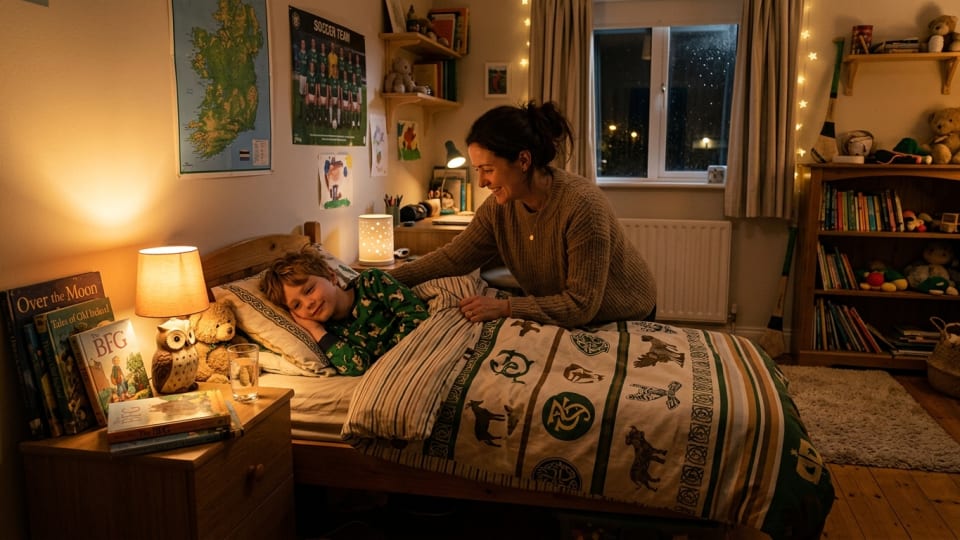
Make it work when life gets hectic
Real life doesn't always cooperate with perfect routines. Late GAA training, family events, or homework overload will occasionally disrupt your schedule. The key is having a shortened version of your routine ready for these situations.
Your "emergency bedtime routine" might be: quick wash, teeth, into pyjamas, two minutes of calm chat, then lights out. It's not ideal, but it maintains some structure when needed.
On particularly challenging days, don't abandon the routine entirely – just simplify it. Consistency matters more than perfection.
Create the right bedroom environment
Your child's bedroom should signal sleep from the moment they enter. Keep it cool (around 16-19°C), dark, and quiet. Blackout curtains or blinds can be particularly helpful during bright summer evenings.
Consider adding a small nightlight if your child feels anxious in complete darkness, but keep it dim and warm-toned. White noise from a fan or gentle music can help mask household sounds that might be keeping them awake.
Building your routine step by step
If bedtimes have been chaotic, don't try to implement a perfect routine overnight. Start with one or two elements – perhaps consistent bath time and reading together – then gradually add other components once these become habit.
Remember that it can take 2-3 weeks for a new routine to feel natural to both you and your children. Be patient with the process and with yourself.
Most importantly, keep your expectations realistic. Some nights will go smoothly, others won't – and that's completely normal. The goal isn't perfection, but creating a generally peaceful end to the day that helps your children feel secure and ready for rest.
With consistency and patience, you'll likely find that bedtime transforms from a daily battle into a time you actually look forward to – a chance to reconnect with your children and help them transition peacefully into sleep.