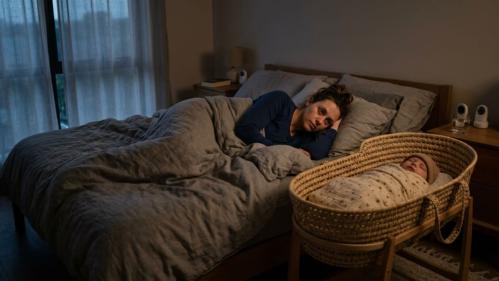
Nobody tells you about the hypervigilance. The sleep deprivation, yes — everyone cheerfully warns you about that. But the part where your brain simply refuses to switch off even when the baby is finally, miraculously, asleep? The part where you lie there in the dark, heart hammering, convinced you heard something? New research from Dublin City University confirms what an awful lot of Irish parents already know in their bones: we are nowhere near prepared enough for what postpartum exhaustion actually feels like.
A new study titled "Restful Nights Happy Days" has found that the vast majority of first-time parents are profoundly underprepared for the physical exhaustion, emotional strain and relentless nighttime alertness that follow childbirth. The research team at DCU's School of Health and Human Performance conducted interviews with new parents and held focus groups with GPs, midwives, psychologists, doulas and lactation consultants. What emerged was a clear and troubling gap in maternity care: new parents are rarely given evidence-based guidance on newborn sleep biology, and almost never equipped with practical strategies to manage the chronic fatigue that comes with those first weeks.
It's not just tiredness — and it's not your fault
The study identified four major themes running through the experiences of new parents. The deeply gendered nature of postpartum sleep came up repeatedly, with limited paternity leave placing a disproportionate burden on mothers. A physical inability to sleep — even when exhausted — due to nighttime alertness was another significant finding. Significant mental health struggles driven by hypervigilance and intrusive worries about infant safety featured heavily too. And underpinning all of it was the enormous pressure on parents to simply adapt and cope without complaint.
Dr Aileen Leech, Postdoctoral Researcher on the project, explains why this lack of preparation can be so damaging. "Our research shows that because parents aren't prepared for the sheer scale of postpartum fatigue, they often internalise the struggle. When exhaustion hits and infant sleep becomes unpredictable, mothers and fathers frequently blame themselves, viewing it as a personal failing or a sign that they are failing as parents. This sense of shame and an expectation of total self-sufficiency create immense psychological distress, which actually stops parents from seeking help."
That rings painfully true. There's a particular kind of loneliness in sitting up at 3am, baby finally settled, and feeling not relief but a creeping dread that you're somehow doing it all wrong. The DCU findings suggest that feeling isn't a character flaw — it's a predictable consequence of going into one of life's biggest transitions without realistic expectations or practical tools.
What DCU is doing about it
In response to the research, the team has developed a bespoke, evidence-based online workshop to support first-time parents through the critical first 12 weeks postpartum. Funded by the Health Research Board and the Rotunda Foundation, the programme was built entirely around parents' lived experiences rather than a one-size-fits-all clinical model.
The workshop covers infant sleep biology, maternal and paternal health, behavioural sleep strategies and how to create a personalised "sleep contingency plan" — which, frankly, sounds like exactly the kind of thing antenatal classes should have been covering all along. The goal is to give parents realistic expectations before the baby arrives, so that when the 4am wake-ups hit, they're met with tools rather than self-blame.
As Dr Leech puts it: "Through this workshop, we want to completely reframe the conversation. Newborn sleep disruptions and parental fatigue are predictable, biological challenges, not individual shortcomings. By giving parents realistic expectations and practical coping tools before the baby arrives, we can alleviate that guilt and better protect their mental wellbeing."
Could you or someone you know take part?
The research team is currently recruiting expectant parents to participate in the study and trial the workshop. To be eligible, you'll need to meet the following criteria:
First-time parents — including single parents, individuals or couples
Between 28 and 35 weeks pregnant
Over 18 years of age with an uncomplicated, singleton pregnancy
No pre-pregnancy sleep disorders
Participants will complete an initial online questionnaire and can attend the educational session either before or after their baby is born. Follow-up questionnaires and brief interviews take place at 4 and 12 weeks postpartum to help the team track outcomes and refine the programme for future parents.
If you're currently pregnant and think you might be eligible, you can find full enrolment details and register on the DCU School of Health and Human Performance application portal.