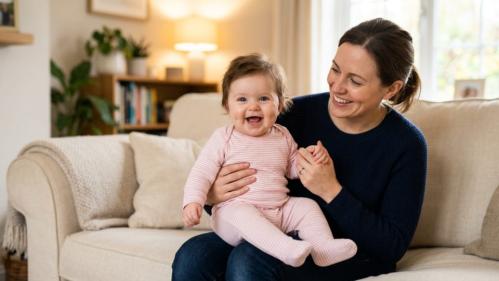
You will need quite a lot of clothing for your baby in the first year, mainly due to nappy leakages and messy mealtimes. Clothing should be soft on the inside, so as not to irritate your child's skin. Higher quality clothing will be more durable and survive many wash cycles. Babies outgrow clothing very quickly, so always buy slightly larger than is needed.
One-piece outfits save time and effort during fitting. Buy the kind that open at the back and along the leg. This makes nappy changing easier. When buying one-piece outfits, test the fasteners to make sure they snap together tightly.
Buy plenty of cotton t-shirts that have fasteners near the neck. These allow for easy fitting over the baby's head. Under shirts provide extra warmth with minimal bulk. Easy fitting pants or leggings allow you to wash just the soiled half of an outfit. Material should be stretchy to easily fit over the baby's belly and nappy.
Cardigans and jerseys with zips down the front allow for easy fitting and provide a lot of warmth for your baby. Make sure that the arm holes and sleeves are big enough to fit without struggling. If a baby struggles too much to get body parts into clothing, they will be reluctant to wear those items.
Fleece jackets are available as one-piece items for small babies and as jackets for older babies. The ones with hoods are even better at providing warmth and protection against cold wind.
Hats with broad brims are needed for summer sun protection and in winter, you need hats or beanies that cover the ears. Look for hats that have chin ties to keep them in place during windy days. Mittens will keep your baby's hands warm and can be kept in place with draw strings.
You will need plenty of socks for indoor wear and booties for outdoor wear. Booties should have draw strings to secure them. Beware of socks and smooth floor surfaces, especially when your baby starts walking.
Shoes are not always necessary in the first year, and many doctors prefer that a child is good at walking before wearing shoes. This prevents the shoes from interfering with foot development. If you do buy shoes, consult with experts to make sure that you buy the right kind of shoe for your child.
One-piece outfits save time and effort during fitting. Buy the kind that open at the back and along the leg. This makes nappy changing easier. When buying one-piece outfits, test the fasteners to make sure they snap together tightly.
Buy plenty of cotton t-shirts that have fasteners near the neck. These allow for easy fitting over the baby's head. Under shirts provide extra warmth with minimal bulk. Easy fitting pants or leggings allow you to wash just the soiled half of an outfit. Material should be stretchy to easily fit over the baby's belly and nappy.
Cardigans and jerseys with zips down the front allow for easy fitting and provide a lot of warmth for your baby. Make sure that the arm holes and sleeves are big enough to fit without struggling. If a baby struggles too much to get body parts into clothing, they will be reluctant to wear those items.
Fleece jackets are available as one-piece items for small babies and as jackets for older babies. The ones with hoods are even better at providing warmth and protection against cold wind.
Hats with broad brims are needed for summer sun protection and in winter, you need hats or beanies that cover the ears. Look for hats that have chin ties to keep them in place during windy days. Mittens will keep your baby's hands warm and can be kept in place with draw strings.
You will need plenty of socks for indoor wear and booties for outdoor wear. Booties should have draw strings to secure them. Beware of socks and smooth floor surfaces, especially when your baby starts walking.
Shoes are not always necessary in the first year, and many doctors prefer that a child is good at walking before wearing shoes. This prevents the shoes from interfering with foot development. If you do buy shoes, consult with experts to make sure that you buy the right kind of shoe for your child.