If your child can identify the Golden Arches from fifty metres but hasn't a clue where a carrot comes from, they're not unusual — and that's precisely the problem GIY is putting front and centre this week.
With the primary school year winding down into its final weeks, GIY (Grow It Yourself) is calling on the Government to urgently expand practical food education in Irish schools. The organisation says a generation of children is growing up dangerously disconnected from real food — and the statistics back that up in a way that's genuinely hard to ignore. Ultra-processed foods now account for an estimated 46% of the Irish diet, and experts are increasingly linking poor food literacy among children to rising levels of anxiety, physical health problems and a fractured relationship with eating that can last a lifetime.
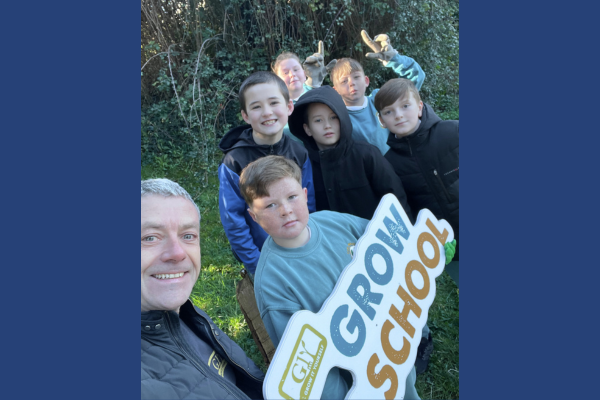
GIY's 'GROW at School' programme is already up and running in approximately 650 primary schools across Ireland, using hands-on food growing to help children learn about where food comes from, what seasonal eating looks like and why it matters. But demand is far outpacing what's currently funded — more than 200 schools are on a waiting list to join the programme right now.
The ask: €7 per child
GIY is calling on the Government to commit €3 million over four years to scale the programme to reach 75% of Irish primary schools. That works out at approximately €7 per child — less than the cost of a decent lunch — to give kids the knowledge, confidence and hands-on experience to make healthier food choices for the rest of their lives.
GIY founder and broadcaster Mick Kelly put it plainly: "We are raising a generation of children who can recognise a fast-food logo before they can identify how a carrot grows. Children today are surrounded by ultra-processed foods and disconnected from where food comes from, how it is grown and how it affects their health and wellbeing. If we are serious about improving children's long-term health, resilience and relationship with food, then food education has to become a core part of school life — not an optional extra."
It's the kind of thing you hear and nod along to, and then go home and quietly check whether your own eight-year-old knows what a leek looks like. (No judgement. We've all been there.)
More than just gardening
The 'GROW at School' programme isn't simply about planting seeds and hoping for the best. It combines practical growing with curriculum-linked learning covering food, nutrition, biodiversity, climate and wellbeing. Schools create food gardens where children grow fresh produce while learning about seasonal and healthy eating.
The results, by all accounts, go well beyond the raised beds. At Knockmore Senior School in Killinarden, Dublin, the school garden has become something of a sanctuary. Sarah Curran, Deputy Principal, described it this way: "The students in our school Gardening Club have benefitted in so many ways from hands-on, interactive approaches to learning. Being in the outdoors interacting with nature and getting their hands dirty has helped students learn how to regulate themselves. It has a calming impact for some students who struggle to focus. It has taught our students core life skills such as teamwork, responsibility and how to nurture."
One pupil, Callum KW (11 years old), summed it up beautifully: "I love gardening so much, it's a place I can calm right down. I think everyone should go and plant a buddy."
That quote alone deserves to be on a wall somewhere!
Mary Bishop, GIY's Head of Education, says it's about far more than horticulture: "In many schools, particularly in disadvantaged communities, the garden becomes much more than a growing space. It becomes a calm space, a confidence-building space and a place where children can reconnect with real food and real life experiences. At a time when the government is rightly investing hundreds of millions in school meals, this is the missing piece of the puzzle. We also need to teach children about food — where it comes from, how to grow it, how to cook it and why it matters."
The bigger picture as summer approaches
As schools up and down the country prepare to close for the summer and teachers start scoping out plans for the year ahead, GIY is urging the Government to include dedicated funding for school food education in Budget 2027. The proposed investment would fund a national network of trained facilitators, growing resources, workshops and curriculum-linked supports for schools across Ireland.
The organisation's argument is straightforward: Ireland is already spending heavily on feeding children through the school meals programme. The next step is making sure those same children understand what they're eating, where it came from and why it matters. The two things aren't competing priorities — they're complementary ones.
With 200 schools already waiting to get involved, the appetite is clearly there. It's the funding that needs to catch up.
For more information on the GROW at School programme, visit giy.ie.