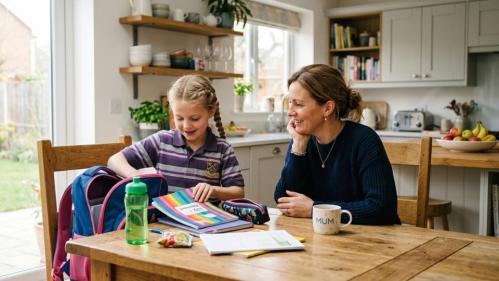

There's a moment many parents recognise — your child heads off to school or out with friends and something shifts. They don't need you to tie their laces anymore. They're rolling their eyes (just a little) when you remind them about their PE kit. They want to sort things out themselves. And while part of you is quietly proud, another part wonders: am I still needed? Am I still close enough?
Encouraging independence in school-age children is one of the most important things we can do as parents — but it can also feel like a slow letting go. The reassuring truth is that fostering independence and staying deeply connected to your child aren't opposites. In fact, done well, giving children more freedom can actually strengthen your relationship rather than put distance between you.
Here's a practical guide for parents of primary and secondary school children who want to get that balance just right.
Why Independence Matters — Even When It's Uncomfortable
Children who are encouraged to make age-appropriate decisions develop confidence, resilience, and a stronger sense of self. When a child knows they can handle small challenges — choosing what's in their lunchbox, resolving a minor falling-out with a friend, remembering their own homework — they build the internal resources that help them handle bigger challenges later on.
It can feel uncomfortable to step back, especially when you know you could just fix it faster yourself. But that discomfort is often a sign that something important is happening. Your child is growing, and you're doing your job well.
The goal isn't to be less present — it's to be present in a different way. Instead of solving problems for your child, you're helping them learn how to solve problems themselves, with you alongside them as a steady, trusted guide.
Start Small: Everyday Decisions Add Up
Independence doesn't have to mean big gestures. For primary school children, it might look like letting them pack their own schoolbag the night before, choose their own outfit, or decide what after-school snack they want. For older children, it could mean managing their own homework schedule, texting a friend to sort out a disagreement, or navigating a situation with a teacher without you jumping straight in.
Each small decision your child makes on their own is a brick in the wall of their confidence. Your role is to create the conditions where those decisions are safe to make — and where they know you're there if it all goes pear-shaped.
A helpful mindset shift: instead of asking yourself "can they handle this?" try asking "what's the worst that could realistically happen if I let them try?" More often than not, the answer is manageable.

The Art of the After-School Check-In
Most parents know the feeling: your child comes in the door after school, you ask "how was your day?" and you get a one-word answer. "Fine." Door closed, emotionally speaking.
The trick is to shift from closed questions to open, curious ones — and to pick your moment carefully. Many children need a little decompression time before they're ready to talk. A snack, ten minutes of quiet, a bit of telly — and then they'll often open up on their own.
When you do chat, try questions like:
"What was the best bit of today, even if it was tiny?"
"Did anything happen today that was a bit annoying or tricky?"
"Is there anything you're looking forward to — or not looking forward to — this week?"
"Who did you spend time with today?"
These questions invite conversation without demanding it. They signal that you're interested in their inner world without making them feel interrogated. Over time, regular gentle check-ins like these become a natural rhythm — and children begin to bring things to you without waiting to be asked.
Building Trust Gradually: The Gradual Release Approach
Think of encouraging independence like gradually releasing a kite. You don't let go of the string all at once — you let a little more out at a time, keeping a steady hand as they rise. This gradual release approach works beautifully with school-age children because it builds trust in both directions. Your child learns they can manage more, and you learn to trust their growing capabilities.
For younger primary school children, this might mean walking to a neighbour's house alone for the first time, or being left to get ready in the morning without reminders. For older children or secondary school students, it might mean making their own arrangements with friends, managing their own money for a school trip, or staying home alone for a short stretch.
Each step is a conversation, not a sudden change. Talk about what the new freedom looks like, what's expected, and what they should do if something doesn't go to plan. This kind of collaborative approach helps children feel respected rather than simply managed.
When to Step In — And When to Step Back
One of the trickiest judgement calls for any parent is knowing when a situation calls for your involvement and when stepping in would actually rob your child of a valuable experience.
A useful rule of thumb: step back for discomfort, step in for danger. If your child is frustrated with a friendship conflict, a difficult subject at school, or feeling nervous about something new — that discomfort is part of growing. Support them emotionally, coach them through it, but resist the urge to fix it for them.
If, however, your child is being bullied, is clearly overwhelmed or anxious in a way that's affecting their wellbeing, or is in a situation beyond their developmental ability to manage — that's your cue to step in fully and advocate for them.
Many parents find it helpful to ask their child first: "Do you want me to help sort this out, or do you want to try handling it yourself?" You might be surprised how often they'll choose to try it themselves — and how much better they feel when they do.
Creating Connection Through Everyday Rituals
The families who tend to stay close as children grow are often the ones who've built small, consistent rituals into daily life — not grand gestures, but simple moments that say we belong to each other.
This might be a ten-minute walk after dinner, a shared TV programme on Friday evenings, a tradition of pancakes on Sunday mornings, or always sitting together for at least one meal a day. These rituals don't have to be elaborate — they just have to be consistent. For children who are increasingly independent and busy with their own lives, these touchpoints provide a steady anchor. They know where home base is, even as they venture further from it.
As your child grows, let them have some say in what those rituals look like. A teenager who chooses the Friday night film feels a sense of ownership and belonging that you can't manufacture — it grows naturally from being included.
Reassure Yourself: You're Connecting Differently, Not Less
It's worth saying plainly: the parent-child relationship changes shape as children grow, but it doesn't have to weaken. In fact, parents who support their children's independence while remaining warm and available often find that the relationship deepens over time. Children begin to see their parents not just as authority figures, but as people they genuinely want to talk to.
If there are days when you feel pushed away or wonder if you're doing enough — that's a sign of how much you care, not a sign that anything is wrong. The child who seems to need you less right now is building the tools to come back to you as a confident young adult who knows they can count on you.
Fostering independence isn't about doing less. It's about trusting more — in your child, in your relationship, and in the quiet, steady work of raising someone who can one day stand on their own two feet, knowing exactly where home is.