If you've ever found yourself sitting on the kitchen floor after a 45-minute standoff over the wrong colour cup, wondering how a small person can have quite so much fight in them — you are absolutely not alone. The toddler years are one of the most intense, bewildering, and yes, occasionally hilarious stages of parenting. And while the love is enormous, so too is the exhaustion.
The good news? Almost every challenging behaviour you're seeing right now is completely normal. In fact, it's a sign that your little one is developing exactly as they should — building independence, testing boundaries, and trying to make sense of a very big, very overwhelming world. None of it means you're doing something wrong.
Here's a plain-language guide to the most common toddler behaviour challenges parents face every day — what's behind them, and what can actually help in the moment.
Tantrums
Tantrums are probably the most universally recognised toddler experience — and for good reason. They're incredibly common between the ages of one and four, and they can feel completely out of nowhere. One moment everything is fine; the next, the world is ending because their toast was cut into squares instead of triangles.
The reason tantrums happen is straightforward: toddlers have big emotions but tiny vocabularies and very immature brain development. The part of the brain responsible for regulating emotions — the prefrontal cortex — won't be fully developed until their mid-twenties. So when a toddler melts down, they genuinely cannot help it. They're overwhelmed, and they don't yet have the tools to cope.
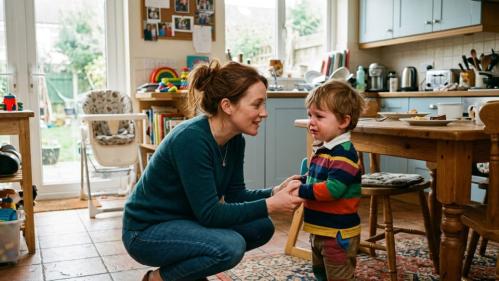
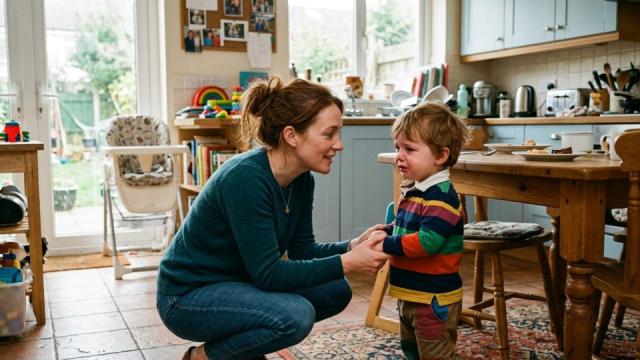
What helps: Stay as calm as you can — your calm is genuinely contagious. Get down to their level, acknowledge the feeling ("I can see you're really upset"), and resist the urge to reason with them mid-meltdown. Wait it out somewhere safe, and offer comfort when the storm passes. Trying to argue or explain in the heat of the moment rarely works and often makes things worse.
Defiance and Saying "No" to Everything
Around 18 months to three years, many toddlers discover the power of "no" — and they use it enthusiastically. They may refuse to get dressed, refuse to eat, refuse to come inside, refuse to leave. Defiance at this stage is actually a healthy sign of growing independence. Your toddler is beginning to understand that they are their own person, separate from you, with their own preferences. That's developmentally brilliant, even when it's maddening.
What helps: Offering limited choices works wonders for many families. Instead of "put your shoes on," try "do you want to wear the red shoes or the blue ones?" It gives your toddler a sense of control within the boundaries you've set. Keeping transitions predictable ("five more minutes, then we're going") also reduces resistance, because toddlers don't like being caught off guard.

Biting, Hitting, and Pushing
It can be really distressing when your child bites or hits another child — or you. It's one of those moments that can leave parents feeling mortified and at a loss. But it's worth knowing that this kind of physical behaviour is very common in toddlers, particularly between one and three years old, and it doesn't mean your child is aggressive or that something is wrong with them.
Toddlers bite or hit because they're frustrated, overwhelmed, overstimulated, or simply don't yet have the words to express what they're feeling. Some do it out of excitement. Others do it when they feel their space is being invaded. It's impulsive, not calculated.
What helps: React calmly but clearly — a firm "no biting, that hurts" without a big emotional reaction (which can accidentally reinforce the behaviour). Redirect them to another activity. Afterwards, when they're calm, you can start naming feelings: "You were frustrated. Next time, let's use our words." Over time, this builds their emotional vocabulary and reduces the need for physical expression.
Separation Anxiety
Clinging, crying, and refusing to let you leave a room — separation anxiety is one of the harder things to witness as a parent, particularly if you're heading back to work or dropping your little one to crèche or a childminder. It typically peaks between 10 and 18 months, but can continue well into the toddler years.
Separation anxiety is actually a sign of healthy, secure attachment. Your child loves you, depends on you, and hasn't yet fully grasped the concept of object permanence — that you exist even when they can't see you. The good news is that most children settle quickly once the goodbye is over, even if the goodbye itself is heartbreaking.
What helps: Keep goodbyes short and consistent — a quick kiss, a confident "I'll be back after lunch," and then go. Lingering tends to make it harder for everyone. A predictable goodbye routine (same words, same hug) can also be reassuring. And if your child's carer tells you they settled within minutes, believe them — it's very common for the tears to stop almost immediately after you've left.
Sleep Resistance
Bedtime battles are a rite of passage in the toddler years. The requests for water, the "one more story," the sudden need for a very specific stuffed animal that's nowhere to be found — many parents know this routine all too well. Sleep resistance typically ramps up as toddlers grow more aware of the world around them and develop a fear of missing out.
Toddlers also go through developmental leaps that disrupt sleep — new skills, new awareness, and big emotions during the day can all bubble up at night. Sleep regression is real, and it's exhausting, but it is temporary.
What helps: A consistent, calming bedtime routine is one of the most effective tools available. Bath, pyjamas, a story, a song — whatever works for your family, done in the same order each night. It signals to your toddler's brain that sleep is coming. Keeping screens off for at least an hour before bed also helps. And try to go in when they call you, settle them briefly, and leave — gradually they learn that bedtime is safe and that sleep isn't something to fear.
Mealtime Meltdowns and Fussy Eating
If your toddler seems to survive on three foods and a prayer, welcome to a very large club. Fussy eating is incredibly common in the toddler years and is closely linked to a developmental phase called food neophobia — a natural wariness of new foods. It's thought to be an evolutionary trait, and while that doesn't make dinner any less stressful, it does help explain why your previously good eater has decided they will now only eat plain pasta.
What helps: Try to keep mealtimes low-pressure. Offering new foods alongside accepted ones, without pressure to eat them, is often more effective than coaxing or bribing. Getting toddlers involved in simple food prep can spark curiosity too. And try not to turn the table into a battleground — the more relaxed you can be, the less of a power struggle it becomes. Most fussy eaters do broaden their palates in time.
Whining
Few things wear parents down quite like relentless whining. It can feel like it goes straight through you. Toddlers whine because they're tired, hungry, frustrated, or simply haven't yet learned a more effective way to communicate a need. It's often at its worst during transitions or when a child is at the end of their tether — not unlike adults, really.
What helps: Try not to give in to requests made in a whining voice, as this teaches toddlers that whining works. Instead, gently model the language you'd like to hear: "Can you ask me in your normal voice?" and respond warmly when they do. Naming what you think they're feeling can also help short-circuit the whining — "I think you're really tired. Let's have a rest."
A Final Word for Worn-Out Parents
If you're in the thick of this stage right now, it's okay to find it hard. It is hard. Toddlers are simultaneously the most endearing and most exhausting little creatures, and there are days when patience feels impossible and the guilt creeps in. That's normal too.
What's worth remembering is this: the fact that you're reading this, looking for ways to understand and support your child, already makes you a thoughtful and caring parent. These behaviours — as challenging as they are — are temporary. They are your toddler growing, learning, and leaning on you to help them figure the world out. And with warmth, consistency, and a lot of grace for yourself, you'll get through it together.
If you have concerns about your child's behaviour beyond what feels typical, or if behaviours are significantly affecting daily life, it's always worth having a chat with your GP or public health nurse — they're there to support you, not judge you.